Tuesday, November 6, 2012

Bulgarian Beer: Zagorka Reserva 2012


After nearly two months without a new post I'm back and where am I now? I'm in Bulgaria! Why the long hiatus? Probably because I really haven't had anything amazing to write about. As I've been heading further and further east it seems that the options for delicious beer are becoming lesser and lesser. The further east you go, the more often people are consuming the light bodied mass produced lagers. And frankly for someone like me, that stinks. But there must be something else. There has to be something other than light bodied light and dark lagers out there. So I headed to a supermarket in search of something to satiate my thirst for something darker, heavier, roastier, and far more robust than what I was drinking; enter: Zagorka 2012 Reserva. I thought I'd found just the thing when I read on the bottle: "Full-bodied winter brew with rich fruity flavour." Holding the plastic 1L bottle (yes that's right, plastic bottle) up to the light I couldn't see anything passing through. Satisfied with my discovery I took it with me. And so here we are.

A little background on Zagorka: it's based in Stara Zagora in central Bulgaria and it was founded in 1902. In the mid-1990's Zagorka was purchased by Heineken and has ever since been brewing and distributing Heineken brands inside Bulgaria. Aside from brewing American style pale adjunct lagers, they've released a few other "special" releases. Most namely, this 2012 Reserva, which as I found out later is a blueberry fruit beer. They've also released a German style dunkel and bock and something they call Fusion, which is beer blended with white grapes. Most people just drink the normal Zagorka pale lager. I think that's about it. Shall we taste some beer?


Name: Zagorka Reserva 2012
Category/Style: Fruit Beer
ABV: 6.00%
IBU: Unknown
OG: Unknown
FG: Unknown
Malt Type(s): Unknown
Hop Type(s): Unknown
Yeast Type: Unknown
Special Additives: Blueberries?????
Bottled: Unknown
Bottle Size: 1 Liter
Location Purchased: Penny Market, Stara Zagora, Bulgaria

The Pour: Head is off-white with slight brown, red, and purple hues. Against the light the beer is clear and dark purplish red. Looks kind of like red wine or some kind of soft drink. Head retention is minimal and lacing in non-existent.

The Nose: Overly sweet and fruity. Smells a bit cough syrup-like with a twinge of artificial berry thrown in. Nose is quite candy-like. Wondering if the beer will live up to its promise of being rich and full-bodied.

The Taste: With the first taste something seems a bit off. Not quite as sweet as I would have expected but the body is a bit thin and I'm left with the cough syrup medicinal taste in my mouth afterwards. Carbonation is medium and I do in fact taste blueberry but the balance doesn't seem quite right. This brew is definitely missing something.

The Verdict: Well I will say that this is the first time I've ever reviewed a beer coming out of a 1L plastic bottle (and hopefully the last). Something was definitely missing from this beer. I think it would benefit from a much more complex malt backbone, showcasing some darker roasted malts for balancing out the sweetness. This is the second blueberry beer I've had and this is the second failure. But when I was looking for a dark beer at the Penny Market in Stara Zagora this one caught my eye. The bottle is dark brown and when I attempted to shine light through it, none passed, so I made the assumption it was just a really dark beer. Couple that with: "Full-bodied winter brew with rich fruity flavour..." typed on the label and I was sold. Little did I know that the "fruity flavour" was what they were really focused on. In any case it was a nice attempt to deviate from the boring assortment of fizzy yellow mass-produced light lagers that everyone drinks here. Even the dark lagers are disappointing. So this was a welcome deviation from the norm. Would I buy it again? No way. Did it satiate my desire for a rich winter brew? Hardly. But to hear that this is the second year in a row they've sold this beer is interesting enough. Will people ever desire something other than the standard assortment of mass-produced lagers here in Bulgaria? Probably not. But Zagorka is offering something else. And that's a good sign. Who knows, maybe in 20 years the craft beer tidal wave will wash over all of eastern Europe? It's already in Prague, perhaps it's just a matter of time before it heads further east? I guess only time will tell.


Thanks for reading!

Zach

Tuesday, September 18, 2012

Břevnovský Pivovar: A Czech Microbrew Revolution?

Prague, Czech Republic: The birthplace of Pilsner and a brewing tradition dating back hundreds of years. But while Czech Republic is world renowned for producing some of the best light beers in the world, can they possibly bear to part ways with tradition and start producing other newer styles? My first search for pubs offering more than one or two beers proved unfruitful. That is until I was introduced to the P.I.V. Alliance.

The P.I.V Alliance (loosely translated means: Smarter Options for Beer) is a collection of certified Czech pubs primarily, but not entirely, located in Prague and dedicated to serving customers a refreshing new selection of beers produced by microbreweries throughout the country. P.I.V. was founded in 2010 by five Prague publicans and has since grown to nine member pubs located throughout Czech Republic. In order to be included in the alliance, pubs must undergo a six-month trial period and meet strict guidelines. The existence alone of the alliance is suggestive of the desire for more variety within Czech beer culture.

After visiting one of the member pubs in Prague, Restaurace Kulový blesk, and examining their various offerings, it's obvious that brewers and customers alike are hungry for more flavours than traditional lighter beers can offer. I was thinking about this situation and how it parallels the situation in 1980's era USA when the craft beer revolution began gaining momentum. The significant difference, however, is that formal beer production has taken place in Czech Republic since the 12th century and probably many hundreds of years before that. The long-standing tradition of beer production was well-established 500 years before America was even a dream. When Pilsner came about in Bohemia in the late 19th century it took the world by storm and in a way, the country has never looked back. The small percentage of craft breweries here are fighting a 170 year-old battle against this very thing. But small brewers are still trying. And the options available at this pub ranged from American Style Pale Ales to Russian Imperial Stouts, a far cry from the dark and light lagers so readily available. It will be interesting to see how the general public takes to these options, and whether or not they'll take hold. Perhaps we are witnessing the beginning of something huge: the craft beer revolution in Czech Republic. Only time will tell.

The beer I elected to try was a Russian Imperial Stout from a small brewery in Prague operating since 2011: Břevnovský Pivovar. The space in which they currently brew was originally used by monks to brew beer in the 18th century but production ceased in 1889. The newly renovated space allows for an annual production of 3,000 hL or about 2,500 barrels/year. In addition to offering traditional light and dark lagers, Břevnovský Pivovar produces an Imperial Pilsner, an IPA, and this Russian Imperial Stout. Břevnovský has also revealed they have a barrel-aging program, with several beers already on wood. The Russian Imperial Stout sits at a very strong 8.5% and is the strongest beer I've seen thus far on my travels through Czech Republic. A microbrewed Russian Imperial Stout from Czech Republic is something I couldn't pass up. On to the beer!


Name: Břevnovský Benedict Russian Imperial Stout
Category/Style: Russian Imperial Stout
ABV: 8.50%
IBU: Unknown
OG: Unknown
FG: Unknown
Malt Type(s): Unknown
Hop Type(s): Unknown
Yeast Type: Unknown
Special Additives: Unknown
Bottled: 08.07.2012
Bottle Size: 330 mL
Location Purchased: Restaurace Kulový blesk, Prague, Czech Republic

The Pour: Jet black, not much light penetrating this beer. Head is dark brown/tan and thick and creamy. Retention is excellent and lacing is decent.

The Nose: Lots of dark fruit and heavily roasted malt. A bit astringent. A little salty. Old coffee, toffee, smoke and dark chocolate. A bit of brown sugar and cocoa powder. Smells like an IRS.

The Taste: A bit thin bodywise. At 8.5% the alcohol is not noticeable at all. Definitely dominated by the roasty smoky malts. Flavour is a little bittersweet, a little salty, a hint of sweet toffee. A bit bready as well. A little spice in there. It's quite light on the palate, and the carbonation is low. As it warms the alcohol becomes more noticeable and I can detect some warming on the back of my throat. Finish is a lingering roasted bitterness.

The Verdict: Quite impressed actually. Finding something other than a light-bodied dark lager has proven difficult but it seems there is an underground culture of beer geeks in existence in Prague. In addition to bottled beers from Czech microbreweries, I saw bottles from Germany and Holland (more specifically from: Brouwerij de Molen) at pubs and bottle shops. The flavours in this beer were spot on for the style and was surprisingly easy to drink. After visiting their website and finding out they're brewing an IPA I might have to pop in and have a taste. If you're coming to Prague and tire of the standard smattering of light lagers, go to the P.I.V. Alliance website and seek out the five pubs located within the city. Their selection will not disappoint. Hopefully this is a small preview of things to come here in a beer culture dominated by light beers, cheers!


Thanks for reading!

Zach

Friday, July 13, 2012

Cascade Brewing - 2009 Sang Royal


This past Wednesday I had the privilege of sharing a bottle of the 2009 vintage Sang Royal from Cascade Brewing. This is not my first Cascade experience. I've had several to be exact (go here and read about another Cascade experience), and knowing firsthand they produce amazing sour ales, I knew this one would be a real treat.

This beer is another prime example of the current barrel ageing craze currently taking place in the US. Most wild/sour ales are attempting to emulate the original versions traditionally produced in Belgium. But most modern brewers and blenders have been taking these styles to all new heights. Experimentation runs rampant and brewers are now experimenting with various fruits such as blueberries, apricots, strawberries, cherries, raspberries, blackberries, peaches and various grape varieties. In addition to experimentation with different fruits we are seeing experimentation in the various wooden vessels brewers use for ageing. These range from charred oak bourbon barrels, Chardonnay, Cabernet Sauvignon, Pinot Noir, Pinot Gris, rum, whiskey, gin and even Port barrels. Indeed it is an interesting age for beer. Brewers are pushing the limits of what we thought possible and we consumers are grateful.

As for this beer in particular, the description tells us that it is an "ale made with various red ales that were aged in oak with Cabernet Sauvignon grapes, then blended with red ales that were aged in Port and Pinot Noir barrels." Sounds mildly interesting ;) In any case, it comes in at a burly 9.345% and will almost certainly have any lover of sour ales feeling light-headed and weak in the knees. The only other bit of information that you might possibly want to know is where this place is located, and that my friend is in the beer mecca of Portland, Oregon. Cascade Barrel House is entirely separate from the Raccoon Lodge (the brewing facility) located just south and west of Portland in the Hillsdale/Beaverton area. Don't look now but they will actually ship their beer directly to your door (I've done it before). Their barrel house website can be found here and a link to the Raccoon Lodge site can be found here. Now, onto the tasting!


Name: Sang Royal 2009
Category/Style: American Sour/Wild Ale
ABV: 9.345%
IBU: Unknown
OG: Unknown
FG: Unknown
Malt Type(s): Unknown
Hop Type(s): Unknown
Yeast/Bacteria Type: Lactobacillus
Special Additives: Cabernet Sauvignon grapes
Bottled: Unknown
Bottle Size: 750 mL
Location Purchased: Unknown


The Pour: Dark rusty red, mahogany around the edges. Head is cream coloured, decent retention, decent lacing.

The Nose: Sour fruit, cherry, oak, wood, vanilla, vinegar, very vinous. Red wine, funk, astringent; it smells incredible! Bright and sour! I wish I could bottle the aroma!

The Taste: Sour on the very tip of the tongue, lots of funk and sourness spreading out as the flavours work their way along the tastebuds. A bit bitter (perhaps from the grape peels as my friend suggested), definitely woody and oaky, lots of juicy red fruit and a hint of dark dried fruit, figs perhaps? Tart and bright, delicious and lots of astrigency. Super tart and finishes very dry. Leaves you wanting more.

The Verdict: This is definitely one of the top 20 beers I've ever tasted. There is just something incredibly delicious and satisfying about a well-made sour beer. These are true sippers and must be enjoyed at a slow pace; to think of drinking them any other way is absurd. There are very few other beer styles that would even come close to matching the complexity of these beers. It is literally layer upon layer of flavour and each sip reveals something new. In my experience, these beers are in the upper tier of the beer world and literally redefines what it means to enjoy a beer. One can simply drink a beer, but to find a beer that during consumption literally wills you to involve all of your senses is something else entirely. This is really what we're all after. Anyhow, the beer can be purchased at the Barrel House in Portland or online, I'm not sure how my buddy came into possession of his but go do yourself a favour and find a way to acquire a bottle! Cheers!


Thanks for reading!

Zach

Tuesday, June 5, 2012

Brewery Review: Goodlife Brewing Company


On a recent trip to Bend, Oregon I had the privilege of stopping in at one of the up and coming beer spots in the beer Mecca: Goodlife Brewing Company. After spending just a short time there, it wasn't difficult to see why the line was nearly out the door and there wasn't an empty table to be had. The beer is brewed with skill and ingenuity; it's evident in the unique assortment of aromas and flavours. I had the privilege of watching Jeff Schauland, one of the brewers, in action. We spoke intermittently between his brewing duties and he explained that the demand for the beer is high and they often have difficulty keeping up with supply for the brewpub.

Left: Dry Hop Pale Right: 29'er India Brown Ale Back: Descender IPA
The range of brews available to me during my visit included the Mountain Rescue Dry Hop Pale, the Sweet As Pacific Ale, the 29'er India Brown Ale, Descender IPA, and the Comatose Imperial IPA. My favourite from the lot was the 29'er IBA, which to me presented the most unique assortment of flavours and aromas.
To say the aroma and flavours found within this beer is complex is an understatement. Your palate will be treated to three distinctly different flavours. On the nose one might assume you've a roasty brown ale sitting before you. But on the initial taste you soon discover that in fact it's not a brown ale at all but something else entirely; the roasty coffee, bitter chocolate notes rear their heads at this time and you're left grasping for an explanation. But just when you think it could not get any better the subtle hop bitterness shows up and it ends with an exceptionally hop-centric finish. At 40 IBU the hops won't blow your palate away, which is nice as it definitely leaves room for other flavours and aromas. This beer is so well balanced and complex it's ridiculous. It's a highly delicious, drinkable and a stand-out example of the India Brown Ale style.


Another example of Goodlife's ingenuity is their Sweet As Pacific Ale which is their single hop summer release. As the name suggests, the hop type is Pacifica and it's the low alpha acid content of this variety that makes it ideal for use as an aroma hop. The Pacifica is a cross breed of Hallertauer Mittlefrüh (the German Noble hop variety). It would also seem that the popularity and usage of New Zealand hop varieties in many american craft beers has led to a bit of a NZ hop craze. Many of these new hop types lend flavours not previously found and has really opened the door for more unique brews. In this case, the Pacifica hop lends tropical flavours (like passion fruit) and notes of citrus to beer. And in this case, the super low IBU suggests that the majority of this flavour will be subtle. Indeed, initially looking at the brew one might assume you've been poured a standard unfiltered wheat beer. But breathe deep and you will soon discover something else entirely. The aroma is not one commonly found. And the flavour is light, crisp, and refreshing; three very good qualities for a summer seasonal.

The 30 barrel, 4-vessel brew system
Having a tour through the facility I noticed there was a lot of empty space. Goodlife brewing has only just begun getting their feet wet within the brewing world, just having opened in 2011 they've grown quickly and their space allows for a bright future. It seems that growth is definitely on the horizon for this brewery, and for good reason too. In addition to beer, they offer food from a menu inspired by the Bavarian Brauhaus and beyond. Fresh grub and fresh beer; you really can't go wrong there. Next time you're in Bend, make sure you stop in at Goodlife Brewing, I can guarantee you won't be disappointed.


Thanks for reading!

Zach


Thursday, May 24, 2012

Verdi Imperial Stout - Stout Brewed With Hot Chili

Trying to get back on the beer blogging bandwagon, I am serving up another Italian beer review. The purchase was impulsive and the "stout brewed with hot chili" typed on the label is what piqued my curiosity. Couple that with the fact that it was the only bottle I could find in the entire store, plus the label being extremely faded and worn made for a good enough reason to buy. In my mind the bottle had travelled a great distance before arriving here. Next thing I know I'm at the register, paying for it.

Verdi Imperial Stout was so named for renowned Italian Opera Composer: Giuseppe Verdi who grew up near the present day location of Birrificio Del Ducato in Le Roncale in North Central Italy. Continuing with the sampling of Italian beers it would seem that I've encountered some very excellent beers. And the scene there continues to explode and I wonder if it's not just a matter of time before the local populations catch onto the fact that they've copious amounts of delicious craft beer within the borders of their country. The Italian craft beer industry has garnered mass attention worldwide, but mostly due to the exportation of their products. Travelling through the country the price of beer is not cheap by any means (especially when compared to that of local wines). I wonder if this more than anything has been a major reason for the lack of interest. Who knows? But there is in fact good beer coming out of Italy. And if you're lucky enough to have a local market or bottle shop selling some of the goods, then drink up my friend. Alright, I'll keep this entry short. Onto the Imperial Chili Stout!


Name: Verdi Imperial Stout
Category/Style: Imperial Stout
ABV: 8.20%
IBU: Unknown
OG: Unknown
FG: Unknown
Malt Type(s): Unknown
Hop Type(s): Unknown
Yeast Type: Unknown
Special Additives: Chili Peppers
Bottled: Unknown
Bottle Size: 330 mL
Location Purchased: Di Laurenti, Seattle, Wa, USA

The Pour: Head is nice, dark, creamy and tan. Colour is wide and ranging; can see traces of reddish hues at the edges but it mostly looks to be dark chestnut brown. Retention is decent. Some lacing.

The Nose: Wow. This nose knocked me back. The aroma has a definite saltiness about it. I'm getting hints of worcestshire sauce and a definite smokey edge which lends an almost barbecue-sauce like characterstic to the aroma. There is a definite cocoa powder note and something else, almost piquant (quite possibly the peppers). Swirling the bowl of the snifter a heavy malt backbone rears its head and I'm also detecting a noticeable mustiness. A sharp spicy bite is detectable; it kind of reminds me of a dark chocolate with chili bar. I'm hoping the taste is on par with the nose...

The Taste: Incredibly dark roasted flavours present themselves from the get-go and there is a very noticeable spicyness on the tongue throughout the first sip. Initially the flavours and aroma pack a wallop on the palate while simultaneously travelling into your nose but those flavours only linger ever so slightly and it finishes with light notes of cocoa and a spicy warmth trickling down your throat. Carbonation is light and the body is medium. The maximum punch of spicy chili peppers peaks midway through and it lingers just on the tip of your tongue. A smokiness works its way to the forefront right at this point and you're left with the perfect amount of spicy and smokey. It really is a very nice beer. Incredibly well-balanced for such a strong, malty, rich brew and the flavour is only slightly salty. It is quite on par with the nose, which I am more than happy about.

The Verdict: I feel like I could drink a lot of this beer and I'm already disappointed I don't have more than this one bottle. The aroma is intoxicating and I feel this beer is more than an ideal pairing for chocolate and thick cuts of steak. The flavours in the beer would definitely hold up well. I've had a handful of chili pepper beers but rarely do they strike as fine a balance as this. The chocolate, roasty and smokey flavours balance perfectly well with the heat from the chili peppers. I'm not sure what else I can say about this beer. It is a prime example of a well-brewed beer. If you love Imperial Stouts, chocolate, chili peppers, or any combination of the aforementioned items don't hesitate to seek out a bottle for yourself. Availability-wise I have no idea. I bought this particular bottle from Di Laurenti at Pike Place Market in Seattle (an Italian specialty store). I spent $11 but it was worth every penny. This is just another prime example of why Italy has been labelled as one of the lesser known premier beer destinations in the world.


Thanks for reading!

Zach

Sunday, May 20, 2012

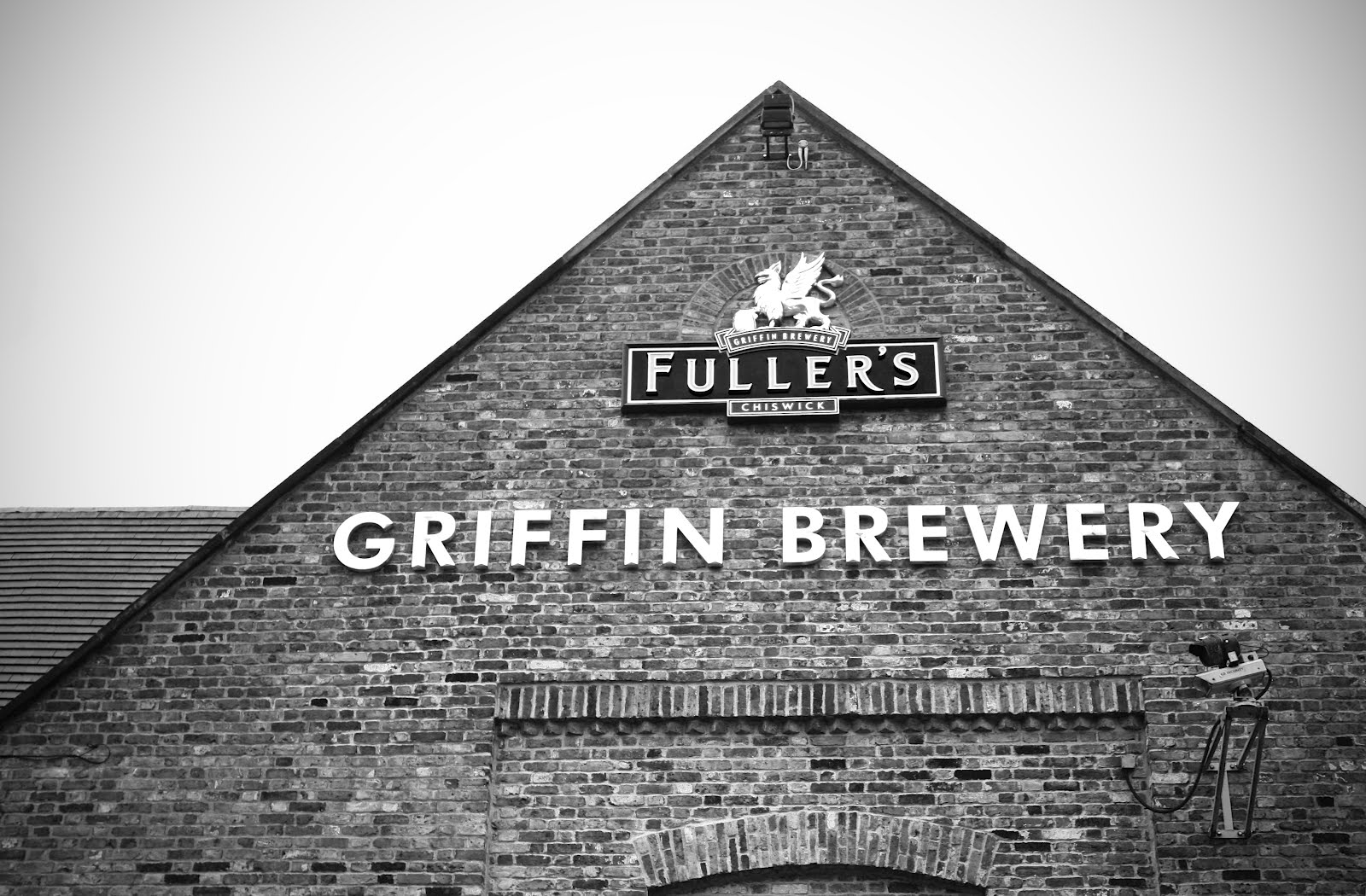
Fuller's: Griffin Brewery

The journey to Fuller's Griffin Brewery has been a long one indeed. Not sure exactly when it began, but I've been drinking their beers for quite a long time and fell hard for their 2005 Vintage Ale after tasting it last year. Indeed, it was the perfect example of English beer in my mind and has remained so ever since. Fuller's has been in business for the better part of 350 years and they have been brewing at the current location for well over 150 years. Fuller's has undoubtedly grown into a commercial brewing enterprise and their beers can be found all-over the world, but this by no means dulls down the quality of their brews. I have come to appreciate a good many of them, but to find the more rare Fuller's brews one must hunt or in my case, journey to the brewery itself to find the prize of their selection: The Vintage Ale.

I tried my best to arrive at the brewery by 11 am but was unsuccessful in my bid to shoot across from North London to Southwest London in under an hour. Sprinting out of the tube stop at Stamford Brook in the grey morning drizzle, it was already half past 11. As in most cases, I could smell the working brewery before seeing it, as I always say: "All you have to do is follow your nose when there is a brewery in the vicinity." And follow it I did. Next thing I know I'm in the bottle shop perusing the selection. I found what I'd come for: The Vintage Ale. They were well-stocked with bottles from '99 to '11. For some odd reason picking up three individual bottles seemed like a good idea. I had no plan for how I'd get them home, but knew I'd figure out a way. They're here at my house, so indeed it all worked out: 1999, 2004, and 2009 all in their own personalized boxes. For the rest of the day I would be wandering around London, through tube stops, restaurants and city streets with a box full of beer; alas, the things we beer lovers do for the love of beer.

My plan was to take a Vintage Ale tour. It would cost an extra £5 from the normal tour price of £10 but I didn't make it in enough time and only had about 30 minutes to spare. I was the lone patron inside Mawson Arms (the attached and official pub of the Griffin Brewery) at 11:30. I grabbed a quick pint of Discovery Ale (their hoppy blonde ale) and snapped intermittent photos between sips. Some beers you might have seen in stores from Fuller's: 1845, London Pride, ESB, and London Porter. They brew many others, IPA's to Golden Ales, Strong Ales and Stouts, don't hesitate to pick one up. The 1845 Celebration Ale is another of my favourites. In any case, I may have missed the tour but that only gives me a reason to return. Drinking a pint of cask-aged English Ale at The Pub at Griffin Brewery on a rainy day in London, well, I wouldn't have it any other way.


Thanks for reading!


Thursday, March 8, 2012

Cascade Barrel House: A Happenstance Tour

And so somehow it happened: I was caught unprepared for a truly amazing beer experience. Although now, looking back on it, perhaps it is best that I did not have my camera on hand for this. Instead, I was able to become completely absorbed in the experience. And I must say, it came absurdly fast, literally one after another. Despite this being a relatively photo-less post, I felt the need to write about it. First, let me take a step back and tell you when, where and what exactly I am talking about.

The when is simple: a mere two nights ago, Tuesday, the 6th of March 2012, in Portland, Oregon at the Cascade Brewing Barrel House. I suppose I had forgotten how close Portland was to Seattle, how much amazing beer there was in Portland, and how lucky I am to be living in such close proximity. I suppose it is similar to living in Amsterdam and never visiting Brussels (or Flanders for that matter) to experience the vast array of world class beer from the region. There are some 80+ breweries in the Portland Metro area and I have never made the trek south to experience them. Unfortunately I was only allowed one day for beer tasting, but my decision was quick and easy: the Cascade Barrel House. The Cascade Barrel House is the showcase for Cascade Brewing. It's where they do all of their souring, blending, and barrel-aging. Why Cascade? Fair question. There are plenty of other amazing Portland brewers but what drew me to Cascade ultimately is my love for sours. I had previously sampled their Kriek, Apricot, and Razberry Wheat and from these brews I was able to draw my conclusion: they brew great beer.

Taking a seat at the bar top, I was presented with a long list of interesting brews. Some were not sours, in fact Cascade brews many non-barrel aged brews. But let's face it, I was there for one reason and one reason only, so I dove right in and started with tasters of their live cask ales. The first: the Blueberry Bourbonic which sits at 11% abv. A blueberry sour aged in Bourbon barrels. Basically their Bourbonic Plague brew with blueberries. The second: L'agent Orange which was 10.78%. Off-hand I can't remember the exact specifications but I do remember it had a fair amount of fresh orange zest and it was aged in Makers Mark barrels for 16 months. Both of these brews were quite strong and super complex, but I was opting for something less burly and more lip-puckeringly sour. So I moved on and began reading the descriptions of all the various beers. I tried the 2011 Sang Noir. Then the Razberry Wheat. It was only at the end of my tasting experience that I realized what I should have been drinking all along: Pater and Noyeaux (tasting notes and details to come later in the post).

It was at this time my friends and I found ourselves poised in an excellent position to witness the tapping of Cascade's latest live ale, a cherry gose from 2011. If you have never been fortunate enough to witness the tapping of a cask (I have a video at the bottom, albeit horrible quality, but you will be able to see what happens when you attempt to drive a tap handle into something highly pressurized) you should inquire at your local brewpub and find out about cask nights. Many brewpubs will have these weekly. As we're waiting, we're watching them cover the bar with plastic, should anything go awry. Finally the time comes, and the countdown begins: 1, 2, 3! And the first swing of the hammer goes down, first to a nice explosion of cherry gose, and then a second time which sends a wide arc of beer into the air, covering everything within a 15 foot radius. The crowd cheered with delight, myself included. It was a really fun experience. And of course I had to have a sample of the beer that I was myself wearing. Out of curiosity, I asked the bartender who had done the honour of the tapping and he promptly informed me that it was the brewmaster and blender: Ron Gansberg and his brother Jeff. As we prepared to leave I noticed both were sitting behind us. I walked up and congratulated Ron and Jeff on a wonderful tap job. Conversation ensues, I find out it's Jeffs Birthday and the next thing I know, I'm being invited back to the barrel room for a tour and group tasting. This is where the experience takes a turn from great to incredible. The only requirement was our need to have safety glasses (and not the eye protection, the kind you drink out of). Rons humour was apparent throughout the duration of the tour.

The excitement builds as we proceed through the doors to the barrel room. The smell of wooden cask is thick in the air. If I remember correctly, Ron said there were roughly 600 barrels in the room. Also newly installed was their massive stainless steel holding tank. Full of Sang Noir waiting to be bottled. My apologies, but the details of the next hour are hazy at best. It was a lightning fast tour and I can't recall how many beers we were able to sample. But it was a true rollercoaster ride. The two standouts (if it's even possible to pick just two) was the Pater and the Noyeaux. The Pater is aged for 12 - 18 months on oak and cherries. The flavours of this brew blew my mind. It had the proper vinegar-like acidic edge I have come to know and love from the traditional Flemish reds and browns. But also had the sweet tartness and funky barrel-aged characteristics expected from this style. This was probably my favourite beer out of the lot. The Noyeaux is a blend of Belgian style strong blonde ales. The first has been sitting in white port barrels and aged on raspberries. The second portion has been sitting on the meat from the apricot seed (the Noyeaux). These two portions are blended together and what you are left with is something truly wonderful. The aroma will send you into a state of euphoria. The noyeaux lends an incredibly sweet almond-like aroma (you can experience a similar aroma by drinking Amaretto, a liqueur which takes its flavour from the same source). The nose is incredibly misleading. As you breathe deep, your senses are tempted to lead you into thinking you'll be enjoying something sweet and decadent. Instead, as you take your first sip, you are dealt a full-on-all-palate-encompassing-sourness that I have come to know and love. An incredible brew.

Cascade utilizes blueberries, strawberries, raspberries, blackberries, apricots, currants and cherries (probably more) and will frequently use things like ginger, orange zest, noyeaux, cinnamon, nutmeg, and various other things to flavour their beer further. They will age beer in port, pinot noir, chardonnay, whiskey and bourbon barrels. And the genius behind all of this is Ron Gansberg. To see him at work and his mind running at a million miles an hour is an incredible thing; always stroking his beard, he runs from barrel to barrel with pliers in hand knowing exactly which one was where and at which state the beer inside was in. How he knows all of this is astounding. It is obvious he is passionate about what he does. The best way to enjoy is to hold on for dear life. It's amazing to be running through the barrel room drinking beer from Cascade Brewing with the blender and genius himself. I would equate it to sitting down to dinner with Wolfgang Puck or some other famous chef at his own restaurant. Like the world of cuisine, beer production and more importantly, barrel-aging is an art. And to have the creator guiding you through the entire experience is incredible. I was definitely an evening of sensory overload! Each sequential combination was so different, and so complex it was mind boggling. At the end of the tour, I found myself with Ron and a couple from California who was in Oregon for their 1 year anniversary. We were able to slow down a bit and just talk beer. It was a truly amazing evening and I honestly can't thank Ron enough. Oh and I might need to get back down to Portland ASAP! Thanks so much to everyone at Cascade Barrel House and especially Ron Gansberg for the incredible tour and tasting. Photo credits go to Justin Moulton.